


AI content does not automatically hurt SEO. Google does not rank a page lower just because AI helped write it. What matters is the quality of the content, how useful it is and whether it actually helps the person reading it.
That is the simple answer. But it is also where many businesses get it wrong.
AI can help you write faster, organise ideas, explain topics and turn rough notes into a readable article. It can also create generic content that sounds fine at first but says nothing useful. That second type of content is where SEO problems start.
If you are using AI to publish lots of thin blog posts, rewrite what every other website already says, or target keywords without adding anything new, then yes, AI content can hurt your SEO. Not because it is AI. Because it is low-value content.
If you use AI properly, with real input from your team, customer questions, examples, editing and a clear reason for the page to exist, it can be part of a solid SEO strategy. For the bigger picture on where AI fits into your business, see our post on where AI actually helps a small business, and where it doesn’t.
So, does Google penalise AI content?
No, not simply for being AI-written.
Google’s focus is on helpful, reliable, people-first content. That means the page should answer the search properly, be easy to understand, and offer something useful beyond copied or reworded information.
This matters because a lot of business owners still think AI content is either a shortcut or a risk. The truth sits in the middle. AI is a tool. It can help, but it cannot replace strategy, experience, or proper editing.
What Google actually cares about
Google wants to show search results that satisfy the user. That means your content should be useful, accurate, clear, and written for real people. This matters just as much for AEO (answer engine optimisation), since AI tools like ChatGPT and Google’s AI Overviews pull from the same kind of content when deciding what to cite or summarize.
For example, if someone searches “does AI content hurt SEO”, they are probably not looking for a robotic explanation of machine learning. They want to know if they can use AI on their website without damaging their rankings.
A good article should answer that directly, explain the risks, and show how to use AI safely. A weak article will repeat the same vague lines about “high-quality content” without giving any practical advice.
When AI content becomes an SEO issue
AI content becomes a problem when it is used to create pages at scale without much thought. This can include:
- Publishing lots of blog posts with no real insight
- Targeting every keyword variation with a separate article
- Copying competitor topics without adding anything new
- Writing pages that sound polished but avoid direct answers
- Using fake expertise or made-up facts
- Creating content mainly for rankings instead of readers
This is not a good long-term SEO strategy. It might get a few pages indexed, but it usually will not build trust, leads, or strong rankings.
Why AI content often performs badly
Most poor AI content has the same problem. It is too general.
It talks around the topic instead of giving a straight answer. It uses safe wording. It repeats common advice. It sounds like it could belong on any business website in any industry.
That is not enough anymore.
It lacks real experience
Good SEO content often includes real examples. It explains what the business has seen, what customers usually ask, what mistakes people make, and what to do next.
AI does not know your customers unless you give it that information. It does not know what your sales team hears every week. It does not know what objections come up on calls. It does not know which jobs are most profitable for your business.
That is why AI-only content often feels empty. It can explain a topic, but it usually cannot add the kind of detail that makes the page genuinely useful.
It sounds like every other article
AI tools are trained on patterns. That means they often produce the same structure and wording that already exists online.
You have probably seen this before. Articles that start with a broad introduction, move into “in today’s digital landscape”, list the same benefits, and end with a generic call to action.
That kind of content is easy to publish, but it is also easy to ignore.
It can miss search intent
Search intent is the reason behind the keyword. Two people can search similar terms but want different things.
For example, someone searching “AI content SEO” might want general information. Someone searching “does AI content hurt SEO” is likely worried about risk. Someone searching “AI content penalty” may want to know if their website has been affected.
If the article does not match that intent, it will struggle. This is where human SEO input matters. AI can help write the content, but it should not decide the whole strategy on its own.
How to use AI content without hurting SEO
The safest way to use AI is to treat it like a writing assistant, not a full content team.
It can help you speed up the process, but someone still needs to guide the topic, check the facts, improve the wording, and make sure the page is useful.
Start with the real question people are asking
Do not start with “write me a blog about SEO”. Start with the actual question your customer would type into Google.
This is where blog content becomes more useful. Instead of writing broad articles that could belong on any marketing website, build content around real problems, real questions, and clear search intent.
For example, we have written guides around common questions business owners often ask, such as:
- How to set up Google Analytics for your website
- Can I turn off Google reviews for my business?
- How to tell if Google Ads will work for your business
- Are you using long tail keywords?
- How to choose a domain name?
- Is my website down?
These are stronger topics because they match how people actually search. They are not written just to fill a blog. They answer something specific, then naturally connect back to services like SEO, Google Ads, review management, and website design.
That is the kind of content AI can help with, but only if the topic is chosen properly first.
Add your own examples
This is one of the easiest ways to make AI-assisted content better.
Before publishing, add examples from real business situations. For example:
- A local service business with old blog posts that no longer bring leads
- An eCommerce site that copied supplier descriptions and struggled to rank
- A company that published too many short AI articles with no clear topic cluster
- A website that improved rankings after rewriting weak content with better structure and clearer answers
These details make the content more useful. They also help separate your article from generic SEO content.
Use AI for structure, not blind publishing
AI is good at creating outlines, grouping ideas, and turning messy notes into a cleaner draft. That is useful.
But the final article should still be checked by someone who understands SEO, the business, and the reader.
A simple workflow might look like this:
- Choose the keyword and search intent
- Check what already ranks
- Create a better outline
- Use AI to help draft sections
- Add real examples and business knowledge
- Remove generic wording
- Check facts
- Add internal links
- Write a clear meta title and description
That process is slower than pressing “generate article”, but it gives you a much better result.
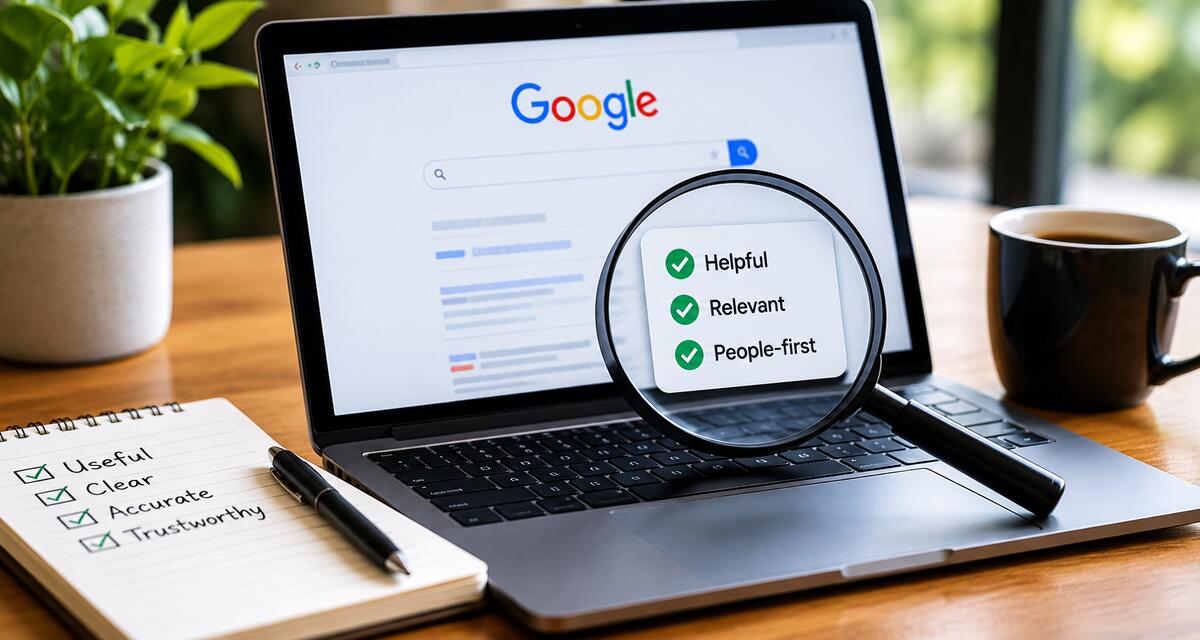
What makes AI content helpful?
Helpful AI content usually has human input behind it.
It should answer the question clearly, match the reader’s level of knowledge, and give them something they can actually use.
Clear answers
Do not hide the answer in the middle of the page.
If the topic is “does AI content hurt SEO”, answer it early. Then explain the details. This is better for readers and better for search.
Real editing
AI drafts often need a lot of cutting. Remove filler. Remove repeated points. Remove sentences that sound polished but do not say much.
Good editing is what makes the article feel natural. It also helps with SEO because the page becomes easier to read and more useful.
Useful internal links
Internal links help users move through the website. They also help Google understand which pages are important and how your topics connect.
For example, an article about AI content and SEO should naturally link to:
This helps turn a blog post into part of a wider content system instead of leaving it as a stand-alone article.
Should small businesses use AI for blog writing?
Yes, but carefully.
Small businesses often do not have time to write long blog posts from scratch. AI can help speed things up, especially when the business already has good ideas but needs help turning them into content.
The problem starts when the business publishes AI content without reviewing it.
Good uses of AI for small business SEO
AI can help with:
- Creating first drafts
- Writing blog outlines
- Turning FAQs into article sections
- Rewriting technical topics in simpler words
- Finding gaps in old content
- Creating meta descriptions
- Planning topic clusters
Bad uses of AI for small business SEO
AI should not be used to:
- Mass-publish hundreds of pages
- Copy competitor articles
- Create fake reviews or fake experience
- Write medical, legal, or financial advice without expert review
- Replace proper keyword research
- Publish content nobody has checked
If your website is attached to a real business, the content should sound like it came from people who actually understand that business.
How AI content fits into a proper SEO strategy
AI content should support your SEO strategy, not become the strategy.
A good SEO plan still needs technical checks, keyword research, content planning, internal linking, local SEO, page optimisation, and conversion tracking.
For example, writing a blog about AI content will not help much if the website has poor page speed, messy headings, no service page links, weak meta titles, or no clear call to action.
Use blogs to support service pages
Blog posts should not just bring traffic. They should support the main pages that make money.
This article, for example, should support the SEO services page because it answers a common SEO question. It could also link to website design because content quality affects how a website performs.
If a business also uses paid traffic, it can link across to Google Ads management, especially when comparing organic content with paid search.
Build topic clusters
One blog post is useful. A group of connected posts is better.
For example, a strong SEO content cluster could include:
- Does AI content hurt SEO?
- How long does SEO take?
- What is local SEO?
- SEO vs Google Ads for small business
- Why your website gets traffic but no leads
- How to choose keywords for a service business
Each blog should link back to the main SEO service page and to related blog posts. This gives the site a cleaner structure and helps users find the next useful answer.
How to check if your AI content is hurting your SEO
You do not need to guess. You can look at the data.
Check organic traffic
Look in Google Search Console and GA4. If AI-written pages are getting impressions but no clicks, the titles may be weak or the content may not match search intent.
If pages are getting clicks but users leave quickly, the content may not be useful enough.
Check keyword rankings
If pages are not ranking after a few months, check whether the topic is too competitive, too thin, or too similar to other pages on the site.
Sometimes the issue is not that AI was used. The issue is that the page was never properly planned.
Check for duplicate or overlapping content
AI makes it easy to create too many similar pages. This can confuse Google and weaken the site.
For example, you probably do not need separate articles for:
- Does AI content hurt SEO?
- Is AI content bad for SEO?
- Can AI content rank on Google?
- Will Google penalise AI content?
Those should usually be one strong article, not four thin ones.
Final answer: is AI content bad for SEO?
AI content is not bad for SEO by itself.
Bad content is bad for SEO.
If AI helps you create clearer, more useful, better-structured pages, it can be helpful. If it helps you publish lots of generic articles with no real value, it can become a problem.
The safest approach is simple. Use AI to help with the draft, but add human judgement before anything goes live. Check the facts. Add real examples. Match the search intent. Link to useful pages. Cut the filler. Make the article worth reading.
That is what gives AI-assisted content the best chance of ranking, bringing traffic, and turning visitors into real leads.
If you want help reviewing your website content or building an SEO content plan, visit our SEO services page or get in touch with the Boost My Business team.

0 Comments